Trading: What Live Futures Day Trading Really Looks Like
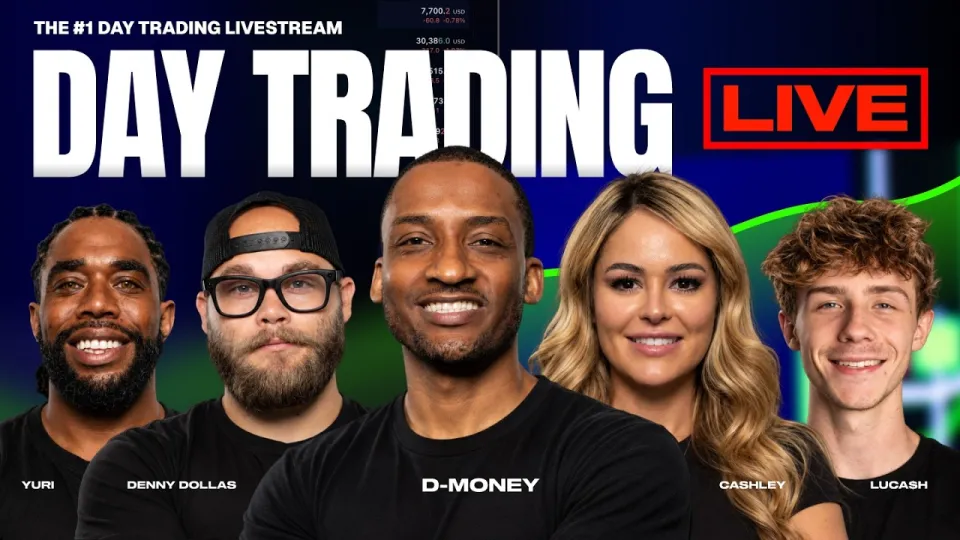
Video: LIVE DayTrading! #1 Watched Futures Trading Show!
Need articles like this for your video? They help promote it on YouTube and Google — order them in the Telegram bot @sat_sit_bot. It writes articles around your video, embeds the video and publishes them on popular niche websites (no ads). Your first 50 articles are free.
· based on the channel Patrick Wieland
Key takeaways
- Live futures day trading streams run every trading day from the BDH floor in South Florida and California, hosted by Patrick Wieland and a four-person crew.
- Prop firm evaluations dominate the format: Lucid Trading, TakeProfitTrader, Apex Trader Funding, Tradeify, Legends Trading, BluSky Trading, TradeDay and MyFundedFutures are the eight firms ranked in the stream's OnlyPropFirms list.
- Patrick Wieland sells a two-hour trading course for $99 that covers the strategy he trades live on stream.
- Copy trading lets viewers mirror a streamer's futures positions instead of learning execution from scratch, but it does not remove drawdown risk.
- Futures are leveraged instruments: a single bad session can breach a prop firm's daily loss limit and end an account.
Trading live on stream is not a performance — it is a job with rules, a loss limit and a clock. Futures day trading means buying and selling contracts like the ES, NQ or CL inside a single session, usually through a prop firm evaluation account rather than personal capital. The format popularized by Patrick Wieland's daily BDH broadcast shows what that work actually looks like: a small crew, a ranked list of prop firms, and a strategy taught for a flat fee.
What live futures day trading actually involves
Futures day trading is the practice of opening and closing index, energy or metals contracts within one trading day, with no overnight exposure. Unlike swing trading, the position is flat before the session ends, which is why futures fit prop firm rules so well — most evaluations forbid holding through the close.
A typical session has four moving parts:
- Pre-market context — overnight range, key levels, scheduled economic releases.
- Execution window — the first 60 to 90 minutes after the US cash open, when volume and range peak.
- Risk cap — a hard daily loss limit, usually a fixed dollar figure or a percentage of the account.
- Review — logging each trade so the same mistake does not repeat tomorrow.
The BDH stream runs this loop in public, every trading day, from two locations in South Florida and California. That transparency is the point: viewers see the losing days, not just the highlight reel.
The prop firm layer that most beginners skip
A prop firm funds traders who pass an evaluation, and the rules matter more than the strategy for most people. The BDH crew ranks eight firms on its OnlyPropFirms list: Lucid Trading first, TakeProfitTrader second, Apex Trader Funding third, followed by Tradeify, Legends Trading, BluSky Trading, TradeDay and MyFundedFutures.
What to check before paying for any evaluation:
- Profit target and maximum drawdown, and whether drawdown is trailing or static.
- Daily loss limit — a trailing limit is far harder to trade than a fixed one.
- Payout schedule and the minimum number of trading days required.
- Consistency rules that cap how much of your profit can come from a single day.
- Whether the account is a simulation or live-funded, and what happens at the first payout.
A cheap evaluation with a trailing drawdown is usually more expensive than a pricier one with a static limit. Compare the terms, not the sticker price.
How the crew structure works on a live trading floor
The BDH floor runs with four named traders: Patrick Wieland, Damareous Young, Lucas Kennard and Denny Jones. A shared floor is not decoration — it creates accountability. When four people trade the same instrument in the same room, bad habits get called out in real time instead of surviving for months in silence.
For a solo trader, the equivalent is a small group with a shared log: same instrument, same session, same rules, and a weekly review of every trade taken. That reproduces most of the value of a physical floor without relocating to Florida.
Copy trading versus learning to execute
Copy trading mirrors someone else's positions into your account automatically. It removes the decision-making step, which is attractive if you have capital but no screen time. It does not remove risk: if the source trader takes a loss, you take the same loss, and you inherit their position sizing whether it fits your account or not.
Questions worth asking before copying anyone:
- What is the maximum drawdown on the source account over the last 12 months?
- How does position size scale with account size — fixed contracts or percentage risk?
- What happens during a news event when the source trader is flat but you are not?
- Are you paying a subscription, a performance fee, or both?
Learning to execute yourself is slower but compounds. A structured course — Patrick Wieland's two-hour program is priced at $99 — is a cheaper starting point than most evaluation fees, and it teaches a repeatable process rather than a signal.
Common questions traders ask before starting
Beginners usually want to know which exact setup is being traded and where to buy it. Both questions show up repeatedly in the stream's comments, and both point at the same underlying issue: traders look for a setup before they have a process.
A setup is only one component. The other three are risk per trade, the conditions under which you will not trade at all, and the rule that stops you after two losses. A trader with an average setup and strict risk control will outlast a trader with a perfect setup and no stop.
If you are evaluating any course or stream, check three things: whether the instructor trades live with real size, whether losses are shown, and whether the material explains why a trade was skipped. Skipped trades teach more than executed ones.
Risk rules that keep a futures account alive
Futures are leveraged, so a small move in the underlying index produces a large move in your account. That is the entire appeal and the entire danger.
Practical guardrails for a day trading account:
- Risk a fixed fraction per trade — commonly 0.5% to 1% of the account, never a round number of contracts chosen by feel.
- Set the daily stop before the open, not after the first loss.
- Stop trading after two consecutive losses; the third trade after a bad start is rarely the good one.
- Track win rate, average win, average loss and expectancy in a spreadsheet, not in memory.
- Treat a prop firm's drawdown rule as your real account size, because it is.
Most blown evaluations fail on rule three, not on market analysis.
Conclusion: what a trading routine should look like
Trading is a repeatable process, not a prediction — the live futures format works because it forces that process into the open every day. The BDH broadcast hosted by Patrick Wieland is a useful reference point precisely because it shows the boring parts: waiting, skipping setups, respecting a loss limit. If you take one thing from that format, take the structure: one instrument, one session, one risk rule, reviewed daily. Build that before you buy another evaluation or copy another trader.
Some links in the source description are affiliate links, and the stream states its content is educational and entertainment only, not financial advice. Futures trading carries substantial risk, and past performance does not guarantee future results.
Source: LIVE DayTrading! #1 Watched Futures Trading Show! · Markdown version
Questions & answers
What setup is used in live futures day trading?
Most live futures streams trade intraday price action around key levels — prior day high and low, overnight range, and the opening range — rather than a single fixed pattern. The exact rules vary by trader and are usually taught in a paid course rather than given away on stream. What matters more than the setup name is the risk rule attached to it.
Where can I learn the strategy traded on the BDH stream?
Patrick Wieland sells a two-hour trading course for $99 through onlypropfirms.com, described as the strategy he teaches and trades live. Watching the free daily stream first is a reasonable way to judge whether the style suits you before paying. No course removes the risk of losing money on futures.
Is copy trading a shortcut for beginners?
Copy trading removes the execution step but not the market risk — you inherit the source trader's losses and position sizing. It can work for someone with capital and no screen time, provided the source account's maximum drawdown is published and the sizing scales to your account. It is not a substitute for understanding why positions are opened.
How much can I lose trading futures on a prop firm account?
You can lose the entire evaluation fee, and any account can be terminated the moment you breach the daily loss limit or the maximum drawdown. Futures are leveraged, so a single session can move an account by several percent. Position sizing and a pre-set daily stop are the two controls that decide how long an account survives.